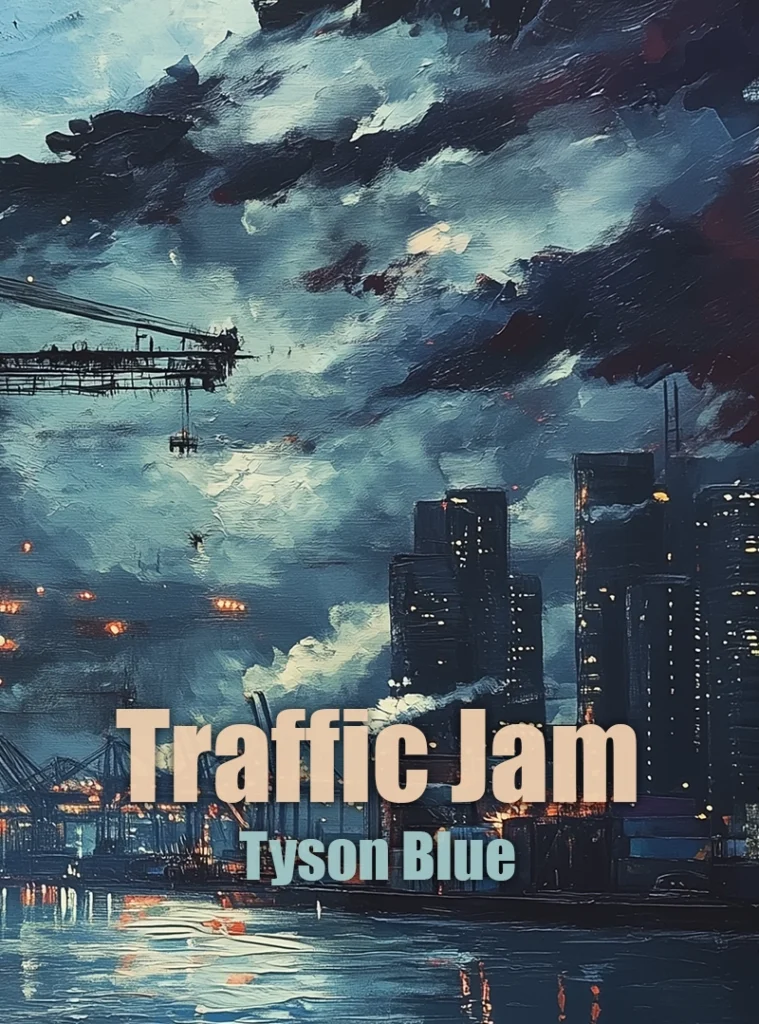
The Conley Container Terminal is the only container port in New England. It is located in Boston Harbor, just south of the runways for Logan International Airport. I was sitting in my car in a parking lot across Farragut Road from the facility. A small, rusty freighter was tethered to one of the docks, swarthy crewmen scuttling around its decks.
Through my binoculars, I could make out the faces of the men on the dock. None of them was the man I was here for, so far.
My name is Ray Vincent. I am, for want of a better name, a hitman. Right now, I live in a little one-room hunting cabin tucked away in the woods down an almost-a-dirt-road in Grafton, New Hampshire. My nearest neighbors have fur and antlers — beavers, deer, black bear, foxes.
About once a week, I drive out to a convenience store on the highway for provisions. If I’m feeling really extravagant, I drive a little further, to Cricenti’s Market in New London. And while I’m out, I check online to see if anyone wants to hire me.
No, I don’t have a Facebook page or anything like that. But I am on the Dark Web, and recently, on one particular day, I found the message that led me to this deserted part of Boston Harbor on this quiet night in July, waiting for my target to show up.
His name was Henry Shaheen, and officially, he was the proprietor of Shaheen Trucking, a mid-size regional shipper who primarily operated in the New England states, with occasional forays into New York and New Jersey, even into Canada, mostly Quebec and Ontario. But what had brought him to my attention, and onto my target list, was his side job.
Mr. Shaheen was into human trafficking. He had mob connections who would round up young girls, hook them on drugs and pack them into containers which were then brought here, to the Conley Container Terminal, where they were loaded onto ships that would take them across the Atlantic, then across the Mediterranean and through the Suez Canal to various Arab countries, where they were auctioned off to various wealthy perverts who would do with them what they would until they were used up, when they would simply disappear.
Most of these girls had come from poor families who lacked the resources to trace them or try to buy them back. And there was no parent with “a certain set of skills” to follow them down the pipeline and rescue them. But one of them had been different; he had money, and had been able, if not to find his daughter, at least to track down who was responsible. He did that with private detectives. And he had tried to bring him to justice, but he had found that there was a difference between knowing something and being able to prove it in a court of law.
And while most people would have stopped there, this girl’s father had the resources and perseverance to appeal his case to the Court of Ray Vincent. And while he knew that, given the amount of time that had passed, it was too late to get his daughter back, it was not too late to get back at Shaheen for his daughter.
We had communicated indirectly, and my fee had been electronically transferred to the first of several stops on its way to my account. After several days spent reviewing the information the detectives had gathered on Shaheen, I was here in Boston, waiting for him to show up.
While I waited, I unzipped the soft case beside me and assembled my sniper rifle. Although normally a brushed-steel weapon with a silvery finish, this one had been blackened to make it blend in with the darkness. A large scope sat atop the barrel, and it had already been sighted in. A precision flash and sound suppressor had been fitted over the muzzle. I wanted the extra time I would gain to get away while the people around Shaheen wondered where the shot had come from.
I looked at my watch. It was 1:14 a.m. All my information indicated that Shaheen should be here before two. I settled in to wait. At about 1:26, I heard diesel sounds coming from the south, to my right. They grew louder, and finally a small truck came into view, “Shaheen Trucking” painted on the door. It was carrying a small container, covered with graffiti and numbers that probably meant something to someone.
As I watched, the truck turned right into the terminal. A gate opened automatically, clacking along on rollers, and the truck drove through before it closed behind it. The truck continued on until it came to a halt near the crane which waited on its spindly steel legs to haul the container off the truck and deliver it to the freighter.
While this was going on, I had slid from the car, the rifle clutched in my right hand. The dome light had been switched off, and I closed the door gently behind me, bumping it shut with my hip so there would be no slam to alert anyone, even if there had been anyone close by.
I rested the barrel of the rifle on the hood of the car and peered through the scope, adjusting the focus so I could see everything. The driver’s side door opened, and a man dropped down to the ground. He had a bullet-shaped head, covered with a thick fuzz of dark hair. He was in his mid-thirties, and was definitely not Shaheen. Just a driver.
I moved the scope back to the cab of the truck. As I did, the passenger opened the far door and hopped down. He was shielded from me by the body of the truck, but the quick glimpse I had caught as he climbed out revealed the grizzled pompadour of Henry Shaheen.
A couple of the men who had been milling around on the pier walked over, and Shaheen reached out to shake the hand of the older of the two. A sharklike grin creased his face, and his eyes glinted under his horn-rimmed glasses. I was sure this was Shaheen. There was no point waiting.
I centered the crosshairs on Shaheen’s temple. There was no breeze. I eased off the safety and took in a soft breath. They couldn’t have possibly heard me from this far away, but I was quiet anyway.
There were four or five men looking around the area, but none of them were looking in my direction. I finished sucking in the breath and held it. The gun was as steady as I could make it.
I squeezed the trigger. The gun made a loud pop. The subsonic high-explosive round rocketed toward Shaheen and hit him in the temple just about in the center of my target area. The top two-thirds of Shaheen’s head exploded into a fine red mist that settled on the two men closest to him.
Shaheen’s near-headless body stood there for a second or so, and then he collapsed to the ground. The two men standing closest to him when the bullet hit stood there for a second. One had been facing him, and his eyes shone bright white through the mask of vaporized blood and brains that coated his face. He instinctively poked his tongue out to lick his lips, then looked at the other man, who had been turned to one side and was only half coated, then glanced down at himself and began backing up, wiping at his face and his clothes, trying to clean himself off but only smearing things around.
Then he gave an inarticulate yell and spun toward the harbor, pulling a handgun from his jacket and firing indiscriminately around the area.
On the freighter, crewmen ducked down behind the rails and began scuttling around. The crewmen on the dock cast the lines off from the pier and raced up the gangway, which began to be hauled in. On the flying bridge, one man, presumably the captain, raced through a door, and a few seconds later, the engines came to life and the ship began to move slowly out into the harbor, gathering speed as it went.
His gun wasn’t silenced, and its sharp cracks rolled around the harbor, bouncing off the buildings around the terminal. I slid into the driver’s seat and started the car. It wouldn’t take long for the sound of those shots to attract attention, and I needed to be out of the vicinity before the place was crawling with police cars. I turned right out of the parking lot and headed south, alert for the first sight of any flashing blue lights.
As I drove by the terminal entrance, I could hear muffled high-pitched screams coming from the container atop Shaheen’s truck. It was probably filled with girls, who were to have been shipped out to Arab nations on the freighter that was now churning its way out of the harbor to the open sea.
“Not my problem,” I muttered to myself, thinking that Shaheen wasn’t going to be worrying about it anymore. It was the last thing on his mind, which was all over his friends’ faces.
I had been hired to take care of Shaheen. My job was done. I had a long way to go to get back to my little cabin in the woods. The truck and its contents were not my concern. Shaheen’s goons could just leave them there and haul ass. They’d be found and released. Also not my problem.
But they could talk, I thought. They could tell where they were from, and where they’d been taken, and that might lead the authorities to Shaheen’s operation, which could cause big problems for whoever took over the business. Also not my problem.
But it was worse than that, I realized.
They were in a truck with Shaheen’s fucking name on the doors; the girls didn’t have to say a word. All the evidence they needed was right there. They had to get the truck and its cargo out of the area before the cops arrived and found all the evidence they needed to put the whole operation out of business permanently.
Not my problem.
And it was even a worse problem than that. They had a truckload of girls and nowhere to sell them. They were just a big liability.
Not my problem. I did my job, and now I just had to get home. It was the only rational business decision. But I kept hearing those muffled screams in my head as I drove.
Not. My. Problem.
But I kept hearing those screams.
No.
Something about those screams.
No. Not my problem…
Those high-pitched screams.
Shut up! Concentrate on your driving!
Too high for women’s screams…
Stop it!
Girls…
No!
Young girls…
God damn it!
Little girls.
A shiver like cold water went down my spine.
Those God damn fucking perverts wanted little girls, and Shaheen was providing them. And now they needed to be gotten rid of.
But it’s not my problem, the voice in my head said.
And if you get involved in this, you might have an even bigger problem. A getting caught kind of problem; a prison problem; a lethal injection kind of prob —
I KNOW THAT! I shouted down the voice.
I gritted my teeth and slowed the car, cranking the wheel to the left.
“Shit,” I growled, and repeated it each time I grabbed the wheel to complete the turn, heading back the way I had come.
“Shit…shit…shit…SHIT!”
I couldn’t believe I was doing this. The only good thing about it was that since I was heading toward the trouble zone, any police cars that came up on me wouldn’t think I had anything to do with it.
As I came up on the terminal, I saw the truck heading the same direction I was, about a quarter-mile ahead. I fell in behind them, keeping them in view, but not getting so close as to attract their attention. In my rearview mirror, I could see the first blue lights coming up behind us. They turned into the terminal entrance, a conga line of police cars one after another.
I wondered how much of a mess Shaheen’s guys had left behind for the cops. I wondered if they’d had time to bring Shaheen’s body with them, because even in his present headless condition, he’d be an arrow pointing straight to his company’s operation in New Hampshire.
In the meantime, I followed the truck, staying four or five lengths back, as we made our way to an on-ramp for I-93 North, which would take us up into New Hampshire. And somewhere along the way, the two men in the truck were going to find someplace nice and deserted and do something to the sources of the screams I’d heard.
Or at least that was what they thought they were going to do.
The traffic on 93 was light this time of night, but it was there, which helped me tail the truck without them knowing it. I blended in and out of the pattern, letting other cars and trucks get between us; I didn’t have to worry about losing them, since the top half of the container was almost always visible.
We had left Boston far behind, along with any worries about the police stopping us. Neither of us was breaking the flow of traffic, which is the one thing you can do to attract the wrong kind of attention. Well, shooting guns would probably do it, too, but you know what I mean.
We crossed over into New Hampshire, and the truck slowed down and took the exit for Londonderry, New Hampshire. I laid back and followed them. No one else got off, so I turned off my headlights and navigated by the fog lights. At the bottom of the exit ramp, the truck headed east, into a wooded area full of lakes and camp houses. It was also a large, wooded, undeveloped area where the men could do what they had to do without significant risk of being heard or seen or surrounded by houses. I had doused my lights completely and moved a little closer.
We drove along a narrow two-lane highway with a canopy of limbs overhead. Finally, the truck turned right down a rutted dirt road. I pulled over, dousing even the fog lights, and watched the truck’s taillights fading down the road. When they went around a corner, I turned the fog lights back on and eased down the road.
The lights illuminated the dust stirred up by the truck as it passed down the road, and as I drove, I lowered both the front windows, listening for any sounds the truck made as it went.
Finally, I heard doors slam ahead of me. Without pulling over, I stopped, put the car in park and extinguished the fog lights. I grabbed the rifle and put in a full magazine, then opened the driver’s side door and slipped out. Easing the door shut without a sound, I headed down the road, my crepe-soled shoes making no sound.
The road turned gradually to the right, and I slowed down and crept forward. Ahead of me, the truck was parked. The two men were behind it, standing at the container doors. One of them was working at the door, trying to open it. The other stood behind him, covering him with a pistol. Finally, the door opened with a low metallic groan. The man who had been opening the door drew a pistol from behind his back and backed up to stand next to his partner.
“All right,” said the one closest to me. “Out you go,” he gestured with his gun, adding, “All of you, come on.”
No one moved. The other man waved his gun impatiently.
“Come on,” he snarled, “move your little asses!”
High-pitched squeals and crying came from inside the container.
The man nearest me waved his gun.
“You there!” he barked. “Yeah, you. Get out here and see if you can get them out.”
As I watched, a young woman, about nineteen or twenty, came to the door of the container. She squatted down and jumped to the ground. She was barefoot and wearing a slip that had seen better days.
“Go on,” the man close to me said. “Get them to come out.”
“I’ll try,” she said in a meek, scared voice. She turned to the door and motioned for the other people in the container to come to the door.
I decided I had waited long enough. I eased myself to the ground and raised the rifle. I put my eye to the scope and focused on the man closest to me. I made sure the woman and the other man were out of my line of fire, took a breath and squeezed the trigger. There was a loud pop and my target’s head vanished in a dark mist. The headless body stood there for a second, then his legs folded and he pitched forward to the ground.
A chorus of squeals came from the open container. The woman and the remaining man backed up aimlessly, both looking frantically around to see if they could figure out where the shot had come from. He was moving around so quickly and chaotically that I couldn’t draw a bead on him.
He reached out and grabbed the girl by the left arm, pulling her toward him and stepping behind her. He placed the barrel of the pistol against her head.
“Hey out there!” he shouted, turning his head back and forth in an effort to see me. “Drop the gun and step out where I can see you right now, or this bitch gets it!”
I didn’t say anything, and stayed where I was.
“You think I’m kidding here?” he said, the pitch of his voice rising higher. He eased the gun away from the girl, waving it around a little before placing it back against her head.
“What’ll you have to bargain with if you shoot her?” I shouted back at him. I knew I wasn’t visible — there was too little light. The girl was looking from left to right too; I could see her eyes moving.
“Are you kidding?” the guy said. “After I shoot her, I’ll pop one of those kids every minute or two until you come out.”
A brilliant plan, I thought to myself.
“They’re not my kids,” I told him. “Do what you want.”
He hadn’t expected to hear that. He had to stop and think about that for a second. And while he was occupied doing that, I squatted down, hoping my knees wouldn’t pop. My hand found a pine cone lying on the ground. I picked it up, then threw it overhand as hard as I could.
It rattled through the branches behind the pair, sounding like something or someone moving rapidly through the brush behind him. He turned to look behind him, and as he did, I stepped into the light and caught the girl’s eye. I jerked my chin sharply downward, then stepped back. I saw the puzzled look in her eyes shift from questioning to knowledge as she realized what I was thinking. She gave a short, sharp nod.
As she felt the man start to turn, the girl gave a small leap, pulled both knees up to her chest and dropped on her butt. At the same time, the man turned back to me. I put three into his center mass, and he fell onto his butt next to the girl. The two of them looked like kids listening to a story. He bounced slightly when he hit the ground, then tipped over to one side and lay still.
The girl sat there for a moment, then jumped to her feet and ran over to me, hugging herself to my chest, her breathing rapid. I patted her hair with my free hand.
“That was all of them,” I told her. “You’re gonna be okay now.”
After a few minutes, she eased back and looked up at me.
“Can you drive this truck?” I asked her.
She looked at it, then back at me.
“Yeah,” she said and nodded. “I don’t have a CDL, but it’s not a stick, so I’m sure I can.”
“Okay,” I told her. “Just follow that dirt road. It’ll bring you out to the main road, and you should be able to call for help from there.”
She looked back at me.
“Can’t you drive us?” she asked.
“It’s not a good idea for me to get involved answering questions from the police,” I told her.
She stepped back, looking alarmed.
“You’re not with—?”
“No, no,” I said. “I’m not with them. I was hired to get rid of them. But the police wouldn’t take kindly to me and the way I…handle things.”
The girl nodded, glanced behind her and back at me. She nodded in understanding. I squatted down and rummaged through the men’s pockets. I found a cell phone and handed it to her.
“Here you go,” I said. “Just give the police a call when you get back to the road, and they’ll come and help you out.”
She juggled the phone in her hand for a moment, then walked up to me. She put her hands on my shoulders and, standing on her tiptoes, leaned in and kissed me lightly on the corner of my mouth.
“Thank you,” she whispered. She stepped back and squatted down to go through the pockets of the man who had held her hostage. She came up with a set of car keys in her hand, pointed a fob at the truck and pressed it. There was a soft clunk from the door and the lights blinked twice.
“I’m gonna let the kids out to pee and settle them down before I head out,” she said. “We’ll be okay. You can be on your way. Doesn’t sound like you want to be around when the cops get here, right?”
I nodded and turned to head back to my car.
“You’re sure?” I asked her.
She smiled and nodded.
“I’m sure.”
I turned and headed up the dirt track to where I’d stopped my car. I got in, started it, did a K-turn and headed up to the highway. I’d pick up 93 again, headed north, until I reached Concord. There, I’d pick up I-89 to New London and make my way back to my cabin in the woods near Grafton. I’d get there before the sun came up, and the only ones likely to see me had paws and fur.
I made it almost back to the 93 on-ramp when it hit me. I stopped dead in the road.
“Dammit!”
Another K-turn later—that sure was my night for them—and I was headed back the way I came as fast as I dared. I couldn’t afford to be pulled over at this point. I found the dirt road and turned in, killing my lights. I grabbed my rifle and headed back down the road, trying not to make any noise.
As I approached the truck, I could hear them. The little ones were screaming and crying, and the girl was standing at the back of the container, one of the dead men’s guns pointed into the interior.
“Get on out here, all of you!” she shouted, brandishing the pistol at them.
“You don’t want to mess with me,” she warned them. While she was doing this, I raised the rifle and took aim. The sound suppressor was still working pretty well, considering how many times it had been fired tonight.
The high-explosive round was right on target, catching her right smack in the wrist, just below the hand holding the gun. Hand and gun fell to the ground. The girl jumped and spun to face me, clutching her bleeding stump to her stomach, her eyes questioning.
“You knew which one had the keys,” I told her, stepping forward. “You knew the truck wasn’t a stick.
“You’re the groomer,” I went on. “The one whose job it was to lure the girls in and keep them calm back here long enough to get everybody out on the open sea.”
Her lips worked, as she started to speak.
“Go ahead,” I told her. “Tell me I’m wrong. Tell me it’s all a big mistake.”
I stepped around her, stooping to pick up the pistol as I walked up to the back of the container and looked inside.
In the back of the container were about a dozen young girls, ranging from toddlers to teenagers. They were all clutching each other in terror.
“Hi, kids,” I said, in as gentle a voice as I could. “My name’s Bill, and I’m going to take you to a place where you can get some help. I’ve got to close this door so you won’t get hurt. Don’t be scared, okay? This will all be over soon.”
Before they could say anything, I closed the door and threw the latch.
I walked over to the girl and stood over her. She was clutching her ruined arm to herself and glaring at me. She didn’t look anything like the innocent young thing who’d climbed out of the back of the truck just a few minutes ago.
The keys were on the ground near her, and I bent to pick them up while watching her closely. Even with one hand, she could still be dangerous. I picked up the cell phone I’d given her from the ground as well, and put it in my pocket.
“What about me?” the girl asked.
“You’ll be okay, if you don’t bleed to death before the police get here,” I told her as I threw in my rifle, climbed into the cab and started the truck. I rolled down the window and looked back at her.
“I’m not gonna hurt you,” I said, and shifted the truck into gear and eased forward. “I’m not gonna hurt you,” I repeated, half to myself. I rolled forward a few feet and slammed the brakes on.
“Like Hell I’m not gonna hurt you!” I said, then shifted into reverse and backed up. There was a big jounce as the tires rolled over her. Then I shifted into first and did it again.
I drove down the road until I reached my car. I got out of the truck, leaving the lights on to make it easier for the police to find them. I pulled a wet wipe from a box on the passenger seat and wiped down the interior of the truck with it, then took my rifle and stepped down. Wiping off the door handle, I walked over to my car, climbed in and started the engine.
When I reached the highway, I put the car in park and turned off my lights. Using the dead man’s phone, I dialed 911.
After a couple of rings, a bored voice sounded in my ear.
“911 Center, what is the nature of your emergency?”
I gave them a fake name, and told them where I was located. They could locate me by the phone’s GPS anyway.
“Down that road,” I continued, “you’ll find a container truck loaded with kidnapped girls who were about to be trafficked out of Boston to someplace in the Arab Nations. They’re mostly young girls, and they’re scared, so hurry up.”
“Yes, sir,” the operator answered. “And—“
I interrupted.
“And further down the road, from the truck, you’ll find three of the people who were responsible for it. Two men and a woman. The guy who was the leader of the whole operation is down at the container port in Boston. They’re all waiting for you.”
“Cars are on their way,” the operator said. “Just stay where you are.”
“Right,” I told him.
“How do you know they’ll all be waiting for us?”
I smiled grimly.
“Because I happened to them. They’ll all be waiting for you.”
I hung up, then wiped the phone down from end to end with the wet wipe and dropped it out the window by the side of the road. Then I put the car back into gear, turned left and headed back up the road toward the I-93 on-ramp and home. I had to pull into someone’s driveway and turn off the car once, so a string of New Hampshire State Police cars and two emergency vehicles could whiz past, sirens and blue lights going strong.
They were going to need a lot more ambulances and rescue vehicles, I thought to myself.
I let them all fade away down the road, then I started the car, backed out of the driveway and headed on toward the on-ramp. As I drove, I thought about all the trouble I could have saved if I’d just kept going back in Boston. I’d be safe at home, not out here on the road running the risk of being pulled over by the States and having to explain what I was doing with a sniper rifle loaded with high-explosive rounds in my car in the middle of the night, and why I was wearing black clothes to boot.
But then I thought about all those young girls in the back of that container truck, and the horror they would have endured for the rest of their lives in some hot Middle Eastern shithole. Maybe that was worth taking a few risks to prevent.
Just then, another State Police car rocketed past me, blue lights strobing. I pulled over to the side of the road to let them go on by. They didn’t turn around, so I figured it was safe to keep on going.
I reached the on-ramp and turned right, and soon I was humming along on the northbound side, headed for home. I thought about the girls some more. I hoped they’d be safe, and nothing this bad would ever happen to them again.
“Must be getting soft in my old age,” I muttered, and drove on.